USRP B310 (PCIe)
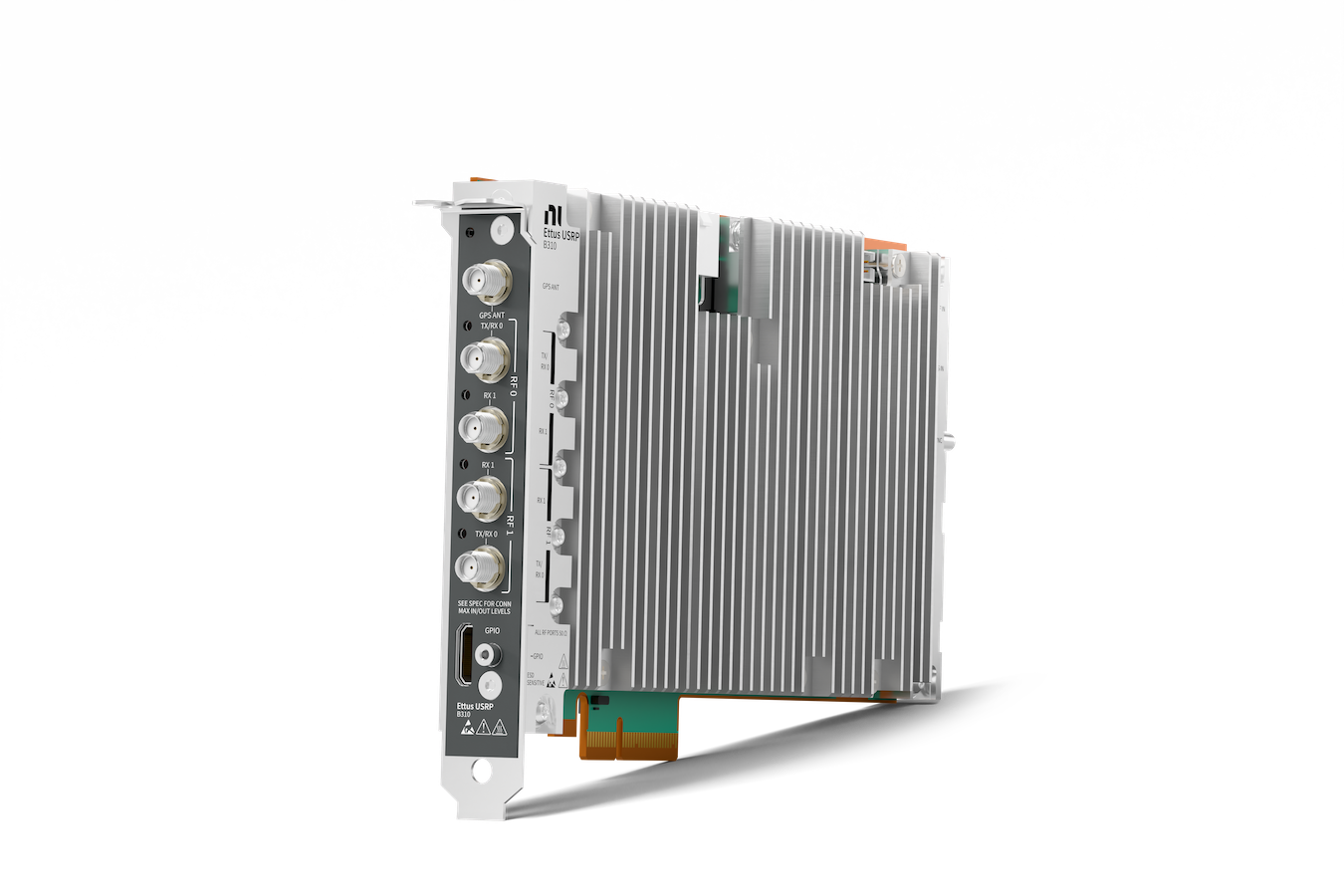
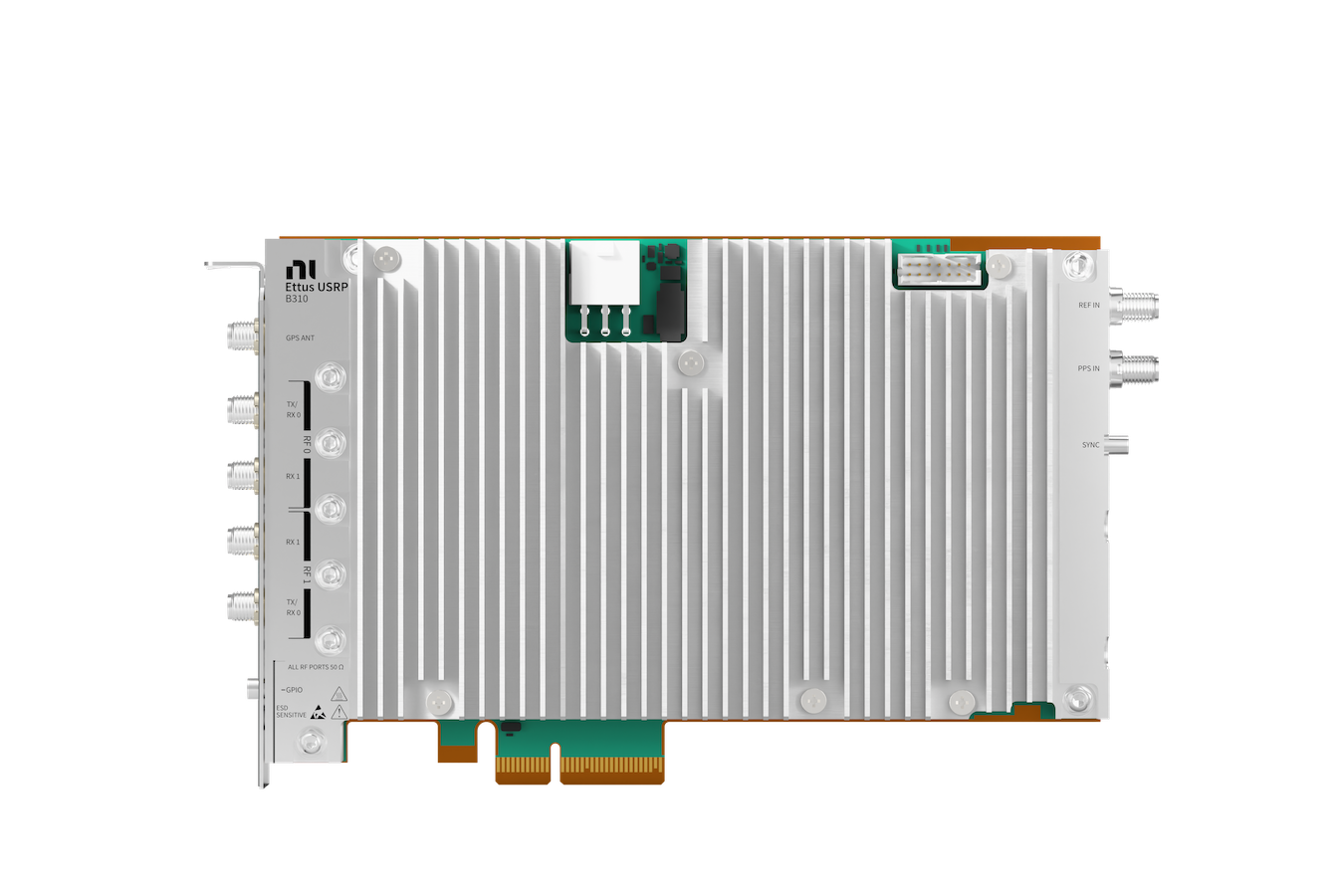
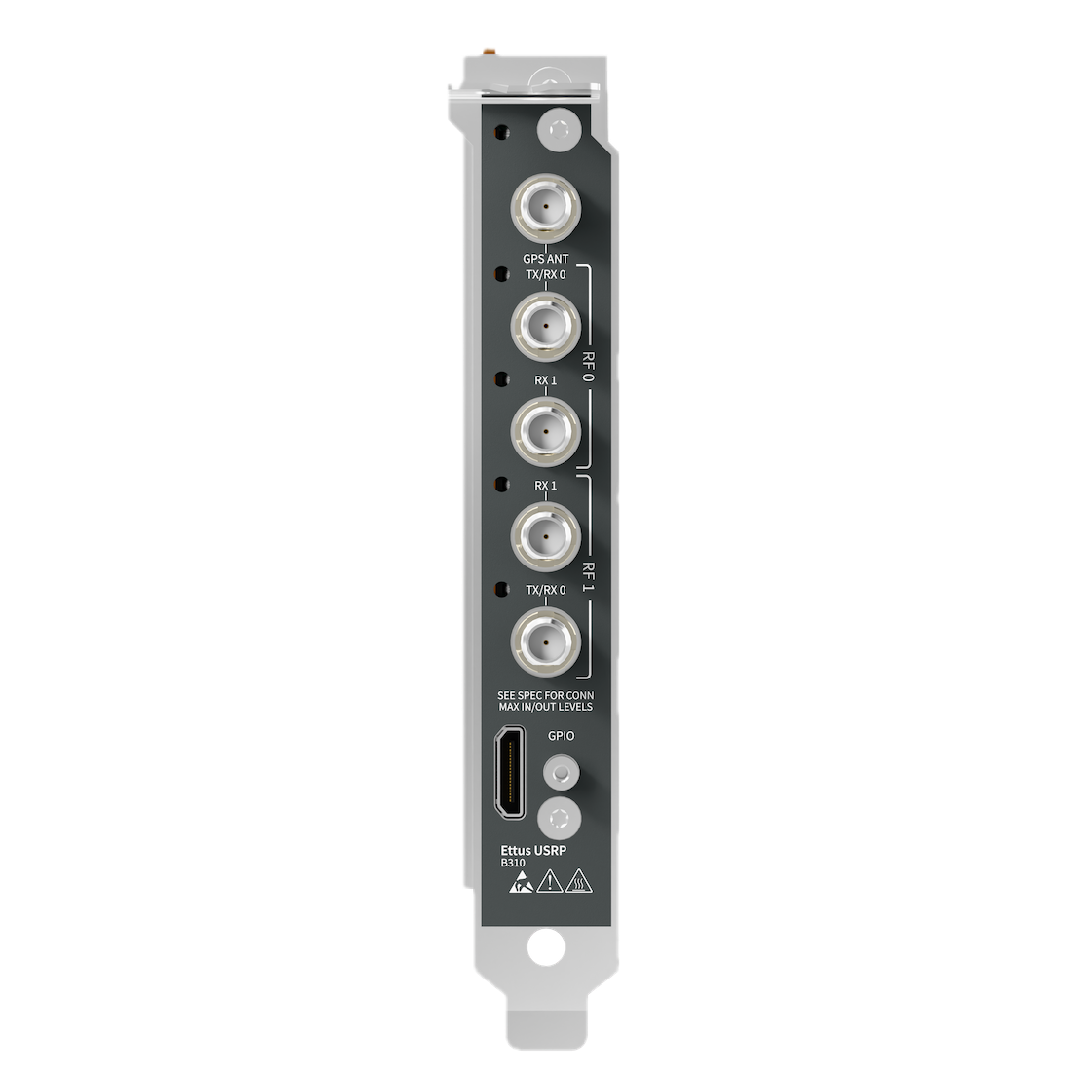
ETTUS USRP B310 (2 TX AND 2 RX, 100MHZ, 350MHZ TO 7.2GHZ SDR), PCIE CARD
The USRP B310 is a 2×2 software defined radio in a standard PCIe card format.
-
Overview
-
Overview
The NI Ettus USRP B310 is an entry-level software defined radio designed for research, prototyping, and deployment for next-generation wireless technologies. It has two transmit and two receive channels, each with up to 100 MHz bandwidth and 2 LOs for independent frequency tuning between 350 MHz and 7.2 GHz. Multi-device synchronization supports up to four B310 devices without external hardware. The B310 is available with Thunderbolt™ 3 bus for lab use and as a PCI Express plug-in card for easy system integration or native GPU coprocessing.
-
Features
-
Features
- 350MHz to 7.2 GHz frequency range
- Up to 100 MHz Bandwidth
- 2 TX, 2 RX channel
- 2 Independent LOs
- Synchronization with built in GPSDO, 10 MHz clock reference and PPS time reference, or Multi-Device-Synchronization (8×8 without external hardware)
- PCIe plug-in card form factor
- 10 MHz and PPS reference import, GPSDO
- GPIO, JTAG control
- User-programmable AMD Kintex K325T FPGA
- USRP Hardware Driver™ (UHD) open-source software API version 4.11 or later
-
Block Diagram
-
Block Diagram
B310 PCIe block diagram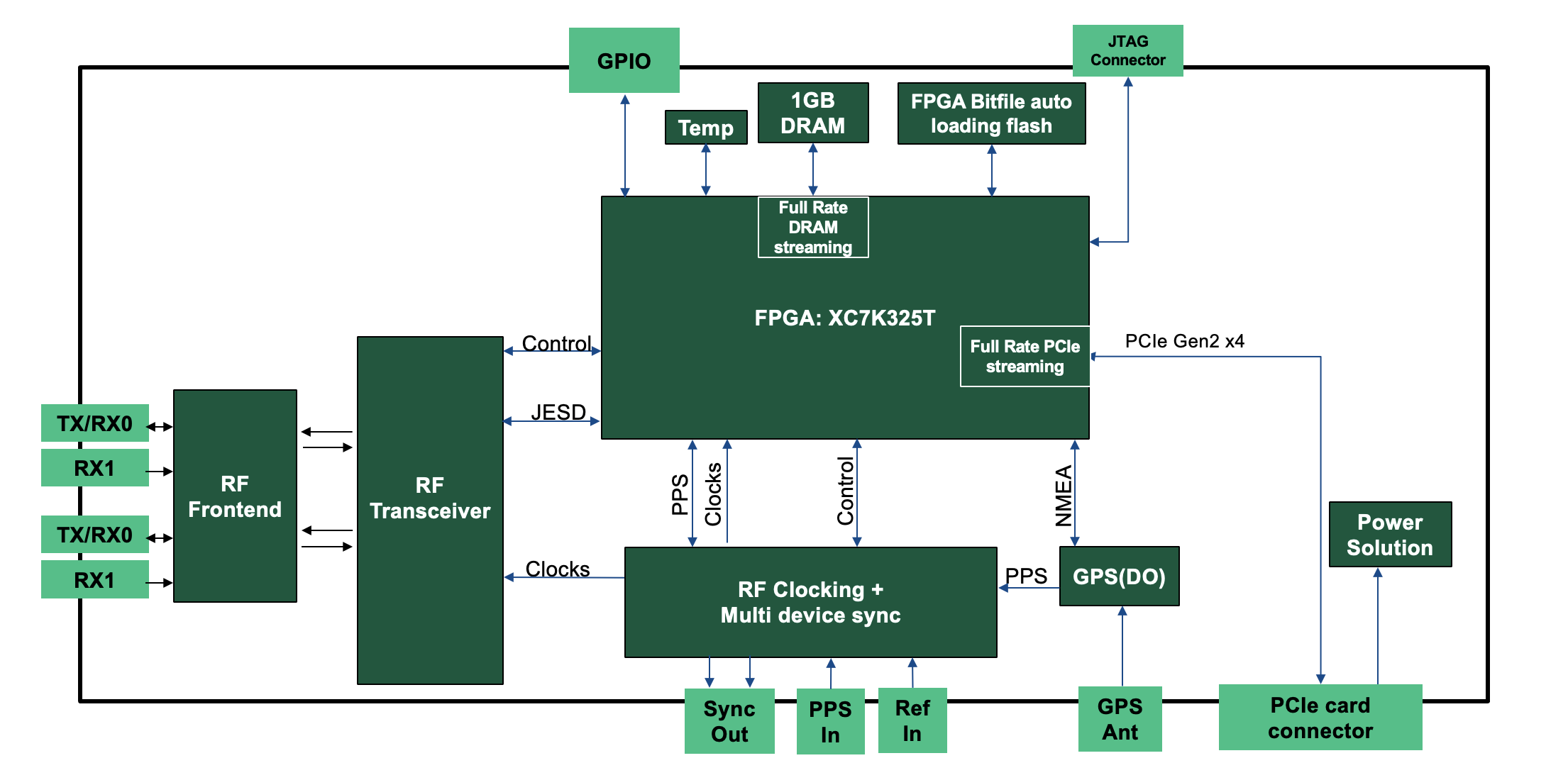 Click on image to enlarge
B310 PCIe block diagram
-
Additional Resources
-
Additional Resources
Included in This Kit:
- USRP B310 PCIe board, including heat sink
Additional Resources:
-
- USRP B310 Series Getting Started Guide
- USRP Hardware and Device Manual
- USRP B310 Safety, Environmental, and Regulatory Information
- USRP B310 Multi Device Synchronization Overview
- USRP Hardware Driver (UHD) API Documentation
- Latest UHD Binaries
- UHD Source Code on Github
- FPGA Resources
- AMD Kintex 7 Product Page
Related Products and Recommended Accessories:
- USRP B310 (Enclosed)
- USRP B310 (OEM)
- Multi-device sync cable
Overview
The NI Ettus USRP B310 is an entry-level software defined radio designed for research, prototyping, and deployment for next-generation wireless technologies. It has two transmit and two receive channels, each with up to 100 MHz bandwidth and 2 LOs for independent frequency tuning between 350 MHz and 7.2 GHz. Multi-device synchronization supports up to four B310 devices without external hardware. The B310 is available with Thunderbolt™ 3 bus for lab use and as a PCI Express plug-in card for easy system integration or native GPU coprocessing.
Features
- 350MHz to 7.2 GHz frequency range
- Up to 100 MHz Bandwidth
- 2 TX, 2 RX channel
- 2 Independent LOs
- Synchronization with built in GPSDO, 10 MHz clock reference and PPS time reference, or Multi-Device-Synchronization (8×8 without external hardware)
- PCIe plug-in card form factor
- 10 MHz and PPS reference import, GPSDO
- GPIO, JTAG control
- User-programmable AMD Kintex K325T FPGA
- USRP Hardware Driver™ (UHD) open-source software API version 4.11 or later
Block Diagram
B310 PCIe block diagram
Click on image to enlarge
B310 PCIe block diagram
Additional Resources
Included in This Kit:
- USRP B310 PCIe board, including heat sink
Additional Resources:
-
- USRP B310 Series Getting Started Guide
- USRP Hardware and Device Manual
- USRP B310 Safety, Environmental, and Regulatory Information
- USRP B310 Multi Device Synchronization Overview
- USRP Hardware Driver (UHD) API Documentation
- Latest UHD Binaries
- UHD Source Code on Github
- FPGA Resources
- AMD Kintex 7 Product Page
Related Products and Recommended Accessories:
- USRP B310 (Enclosed)
- USRP B310 (OEM)
- Multi-device sync cable